
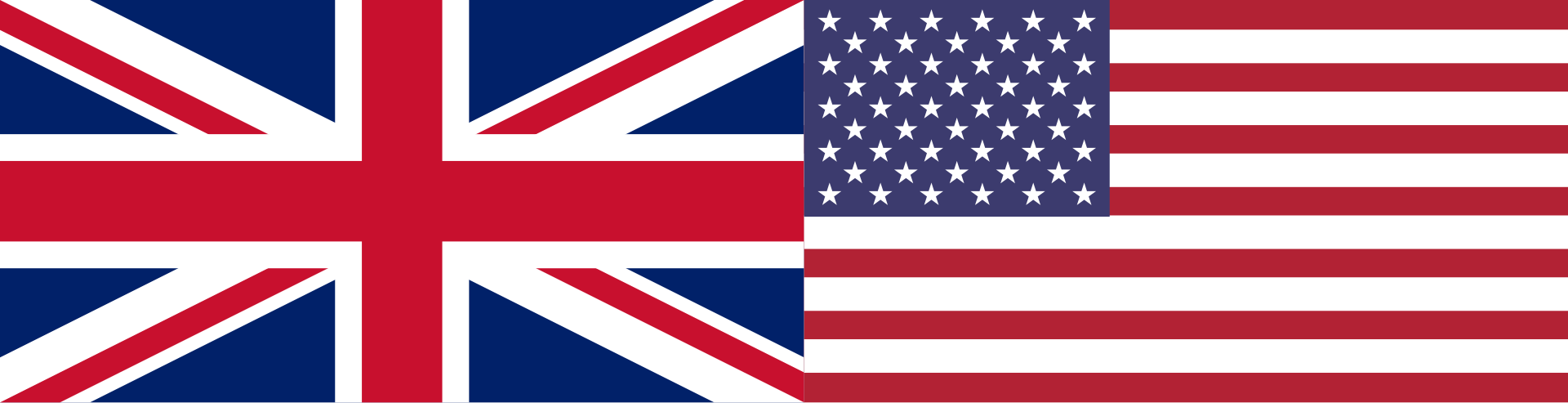
The Chemical Gap: What the EU and UK Have Banned in Clothing That the US Still Allows
By Andrew Havill, Co-Founder & CEO of QUOR
The new frontier of fabric isn't performance. It's regulation.
For men who pay attention to what goes into their bodies, the conversation usually starts with food, water, and supplements. Clothing rarely enters the frame. That's an oversight the market hasn't caught up with yet, and the regulatory data from the last decade makes the case clearly.
The European Union and the United Kingdom have spent the better part of twenty years systematically restricting the chemicals permitted in textiles. The United States has not. The result is a measurable gap between what you can legally wear in London or Berlin and what shows up in the average American wardrobe.
Two philosophies, two outcomes
The difference between European and American chemical policy comes down to a single principle.
The EU operates under what regulators call the precautionary principle. If a chemical is suspected of causing harm, the burden falls on manufacturers to prove it is safe before it reaches consumers. This is codified in REACH, the Registration, Evaluation, Authorisation and Restriction of Chemicals framework in force since 2007. REACH covers more than 21,000 chemicals across industries.
The United States takes the opposite approach. Under the Toxic Substances Control Act of 1976, chemicals are presumed safe until proven harmful. When TSCA was first enacted, it grandfathered in more than 62,000 chemicals without requiring any safety testing. The 2016 Lautenberg Act updated TSCA, but the fundamental framework remains reactive rather than proactive.
The scale of the divergence is striking. In cosmetics alone, the EU has banned or restricted over 1,300 chemicals. The US has banned eleven.
In textiles specifically, REACH Annex XVII Entry 72 restricts 33 substances classified as carcinogenic, mutagenic, or toxic to reproduction in clothing, bedding, and footwear. That restriction has been in force since November 2020. No equivalent restriction exists at the US federal level.
The specific chemicals, and why they matter
The substances restricted in European textiles are not obscure industrial byproducts. They are common components of conventional clothing.
Phthalates. Used as plasticizers in synthetic fabrics, PVC prints, elastic waistbands, and processing aids, phthalates are among the most studied endocrine-disrupting chemicals in consumer products. The Endocrine Society identifies phthalates as reducing testosterone and estrogen levels, blocking thyroid hormone action, and functioning as reproductive toxicants. Published research in Translational Andrology and Urology has linked phthalate exposure to decreased semen quality. A 2015 study of 753 baby boys found that prenatal exposure to the phthalate DEHP disrupted reproductive development. The EU restricts multiple phthalates in textiles under REACH. The US does not.
PFAS, the forever chemicals. Per- and polyfluoroalkyl substances are used for water and stain resistance in performance apparel. They do not break down in the environment or the human body. The EU has banned PFCA and PFHxA groups in consumer textiles, with a universal ban advancing through the European Chemicals Agency. France banned PFAS in textiles effective January 2026. Denmark follows in July 2026. In the US, only a handful of states have acted. California, New York, and Colorado have restrictions in place or phasing in. At the federal level, there is no comparable ban.
Nonylphenol ethoxylates. These surfactants wash out of clothing in the first several laundry cycles, degrading into nonylphenol, a chemical classified as a priority hazardous substance under the EU Water Framework Directive. The EU banned domestic manufacture in 2004 and extended the ban to imported textiles in 2016. The US has no federal textile-specific restriction.
Formaldehyde. Used to create wrinkle-free finishes on natural fibers, formaldehyde is a known skin irritant and respiratory sensitizer. REACH sets strict limits in finished textiles, with tighter thresholds for garments in close contact with skin. The US has no federal limit on formaldehyde content in clothing.
Heavy metals and azo dyes. REACH sets thresholds for lead, cadmium, chromium VI, and arsenic in textiles, and restricts certain azo colourants to a maximum of 30 mg/kg. These restrictions apply to both EU-manufactured and imported clothing. The US regulates some of these substances in children's items, but not comprehensively across adult apparel.
Why this gap exists
Three forces have kept American chemical policy behind Europe's.
The first is philosophical. The precautionary principle requires manufacturers to produce safety data. The risk-based framework waits for harm to emerge from use.
The second is structural. REACH is centralized under the European Chemicals Agency. In the US, authority is fragmented across the EPA, FDA, CPSC, OSHA, and state-level regulators. A chemical restricted in cosmetics by the FDA may remain unregulated in textiles by the EPA.
The third is political. The American Chemistry Council and related trade groups spend hundreds of millions annually on federal advocacy, and the US regulatory structure provides less insulation from that pressure than the European system does.
The practical result is that chemicals banned from European markets continue to be sold, used, and worn in the United States.
What this means for men who read the research
For the men who optimize sleep, track glucose, and think carefully about microplastics and endocrine disruptors, clothing is the last frontier of exposure that remains largely unexamined.
The skin is the body's largest organ. It is permeable, and it is in constant contact with fabric for roughly sixteen hours a day. For men, the tissue most consistently covered by synthetic fabric, the scrotum, is also the most thermally and chemically sensitive. The scientific literature on endocrine disruption and reproductive toxicity from synthetic textiles is not speculative. It is documented, peer-reviewed, and increasingly acted upon by the regulatory bodies of the most developed economies in the world.
The question is not whether the chemistry of conventional apparel matters. The question is how long it takes the US regulatory framework to catch up.
The standard QUOR was built to meet
QUOR was engineered around the assumption that American men deserve the same chemical standards Europeans already have by law.
The Performance Boxer is constructed from 95% TENCEL Lyocell, a cellulose fiber derived from responsibly managed wood, processed in a closed-loop system that recycles 99% of its solvents. The remaining 5% is BPA-free elastane, selected for performance without the persistent microplastic load of conventional spandex. The fabric is certified to OEKO-TEX Standard 100, a European testing protocol that screens for more than 1,000 harmful substances, including the phthalates, PFAS, NPEs, formaldehyde residues, heavy metals, and azo dyes restricted under REACH.
The inner pouch, the garment's most important panel, is 100% TENCEL Lyocell. No synthetics touch the tissue where chemical exposure matters most.
This is not a marketing claim dressed up as a certification. It is the same standard European regulators use to determine what can legally be sold to their citizens.
Engineered for Vitality. Designed for Life.
Sources
Bluesign. "PFAS in Textiles: Bans, Health Risks, and Safer Alternatives."
Endocrine Society. "Plastics, EDCs and Health: Authoritative Guide."
European Chemicals Agency. "Substances we don't want in our clothes."
Fieldfisher. "PFAS Regulation in the UK and European Union: November 2025 Overview."
GOV.UK. "Nonylphenol ethoxylates to be banned in imported clothing and textiles."
Rehman S et al. "Endocrine disrupting chemicals and impact on male reproductive health." Translational Andrology and Urology, 2018.
US Government Accountability Office. "Chemical Regulation: Comparison of U.S. and Recently Enacted European Union Approaches to Protect against the Risks of Toxic Chemicals."



Leave a comment
This site is protected by hCaptcha and the hCaptcha Privacy Policy and Terms of Service apply.